Ashburn's mosquito pressure is mostly homegrown, and that is good news. The Asian tiger mosquito — the aggressive black-and-white daytime biter most Loudoun homeowners are swatting on the patio — breeds in containers,…
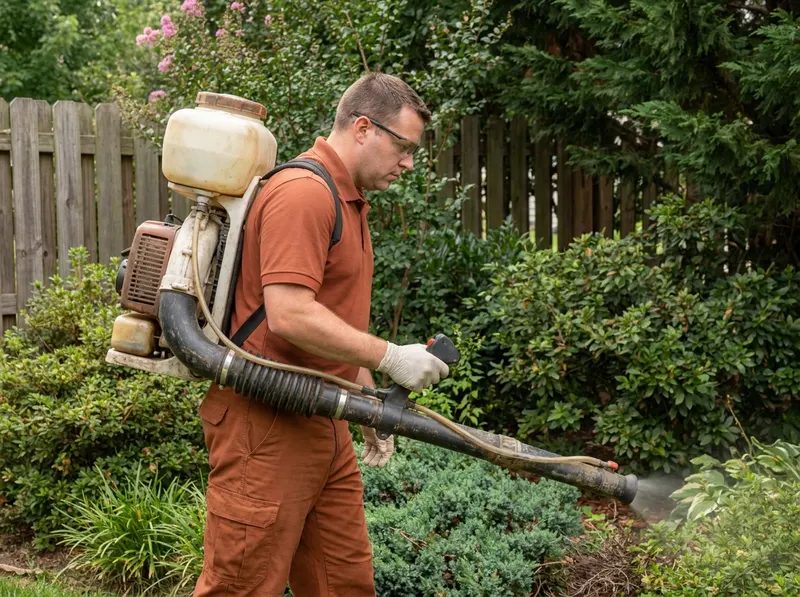
Ashburn's mosquito pressure is mostly homegrown, and that is good news. The Asian tiger mosquito — the aggressive black-and-white daytime biter most Loudoun homeowners are swatting on the patio — breeds in containers, not in ponds, and it needs only about a tablespoon of water to do it. It also flies a short distance in its lifetime, often a few hundred feet. That means the mosquitoes biting you in Ashburn Farm or Farmwell Hunt were, in all likelihood, born within sight of your own deck: a corrugated downspout extension holding water, a plant saucer, a tarp over the grill, a kid's sand bucket, a clogged gutter section, or the tray under an AC condenser. The first thing we do on a yard walk is count those, empty them, and show you which ones will refill after the next Tuesday thunderstorm.
Retention ponds and wet features are a different animal and shape the treatment plan. Houses backing to the stormwater ponds in Brambleton, Moorefield Station, and Broadlands, or to the Ashburn Village lakes, get steady Culex activity at dusk, and homes near Goose Creek, Beaverdam Reservoir, or the wooded stretches along the W&OD Trail deal with a shaded, humid tree line that stays cool all afternoon — prime resting habitat. On those lots the barrier work goes heaviest on the back property line and the underside of foliage rather than the open lawn, because that is where adults actually sit between blood meals. On the tighter slab-on-grade townhome lots in One Loudoun and Loudoun Valley Estates, the whole yard is often shade and fence, so the treatable surface is small but the harborage is dense.
Deciding between a single treatment and a seasonal program comes down to what you want out of the yard. A one-time application is the right call for a graduation party, a Belmont Country Club backyard dinner, or a stretch of vacation at home — book it 24 to 72 hours ahead and you get about three weeks of relief. A repeating visit schedule from late spring through the first hard frost is the honest choice if you eat outside most evenings, since each rain event and each flush of new leaf growth reduces residual coverage. The trade-off is straightforward: one treatment costs less and does less; a program costs more across the season and holds the count down through the July and August peak. Either way, we ask about vegetable beds, flowering plants, backyard beehives, pets, and where children play, and we keep the application off blooms and away from areas you flag. Nothing is billed month-to-month against your will, and you can stop after any visit. Sealed out, not just sprayed down applies here too — the water we drain and screen does more long-term work than any spray.
Every job gets a firm, written price after a free on-site visit.
Tell us about your mosquito control job in Ashburn and we'll send a clear, written quote — usually the same day.
 Nexora Pest Control Service